Key Takeaways
- The 2026 Upfronts and NewFronts confirmed that the old lines dividing linear TV, streaming, and social video have effectively disappeared.
- Live sports remains the single most reliable driver of mass, simultaneous reach — now sold across both linear TV and streaming.
- First-party data, automation, and shoppable formats are turning streaming video into a measurable, full-funnel performance channel.
- Winning in 2026 means buying these channels as one integrated ecosystem — which is exactly how we operate at Marshall Advertising.
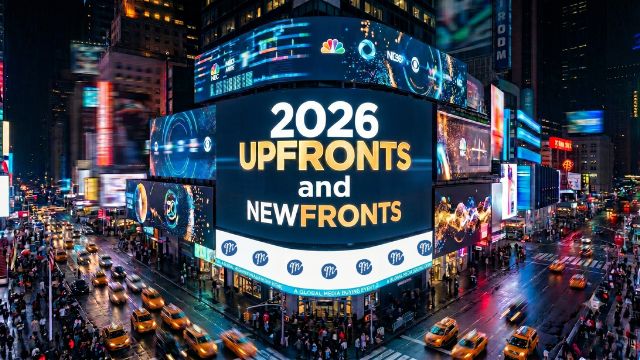
Tracking the recent 2026 Upfronts and NewFronts in New York reveals a fascinating evolution in how the media landscape is structuring itself. The old boundaries dividing traditional TV, streaming apps, and social video have effectively vanished. Legacy networks are rolling out advanced tech platforms, streaming companies are buying up traditional sports packages, and social networks are operating like interactive shopping malls.
For brands looking at their media allocations, this shift brings incredible opportunities. The market has moved to a highly integrated, always-on ecosystem. The puzzle today isn’t just about finding where the viewers are; it’s about understanding how new data tools can help traditional and digital channels work together to drive real business outcomes. At Marshall Advertising, we live and breathe media buying across all channels, from broadcast television and radio to streaming and digital programmatic. Because this ecosystem changes rapidly, we prioritize continuous learning alongside our clients, ensuring we always navigate these new tools with absolute precision.
Here is an objective look at how the industry’s biggest players are restructuring their offerings.
1. TV Networks & Entertainment Giants
NBCUniversal: Live Sports and Unified Data
NBCUniversal made it clear that live sports remain the ultimate anchor for concurrent mass reach. They locked down a new NBA package to take over Tuesday nights, which runs alongside established anchors like Sunday Night Football and prime-time college football. Beyond content, NBCU’s primary focus is an automation strategy designed to trade and optimize ad placements in real time across linear TV, Peacock, and their digital apps. Since linear TV still commands over 57% of all ad-supported viewing according to Nielsen, bridging the gap between traditional reach and digital targeting remains a key priority for the network.
Disney: Streaming Ecosystems and Year-Round Buying
Disney highlighted the scale of its portfolio—stretching from The Bear to a high-profile sports lineup—to prove its cross-screen capability. Architecturally, the biggest news was their push for a “year-round” ad-buying model, treating media budgets more like continuous retail cycles rather than a single seasonal purchase window. On the sports side, Disney detailed its centralized direct-to-consumer ESPN streaming platform, featuring real-time sports betting tools, fantasy dashboards, and custom highlight reels. With Disney’s ad-supported digital reach now passing 164 million monthly active users, they are leveraging first-party data tools to allow for precise audience targeting within privacy-safe environments.
Warner Bros. Discovery (WBD): Streaming Growth and Structural Rebranding
Warner Bros. Discovery focused heavily on the equity of its core content brands, especially after adding 22 million new users to its streaming footprint. With a total global subscriber base of 122.3 million, WBD’s streaming business has officially turned a profit. On the advertising side, they showcased expanded Hispanic streaming initiatives and real-time messaging features that automatically adjust ad creative based on what the audience is watching.
Paramount Global: Focused Consultative Workshops
Paramount skipped the traditional large-scale theater presentations this year, favoring intimate, data-focused workshops for clients. This reflects a broader shift in their strategy: premium media is moving squarely toward tracking and performance metrics. Paramount is leaning into a performance-driven streaming TV model, rolling out always-on attribution and live data dashboards. By using their Paramount Personas tool—which groups first-party data into 80 distinct audience segments—they are pairing hit content like Tracker and March Madness with direct proof of purchase intent to support their 79 million global streaming subscribers.
Fox: Turning Fan Passion into Performance
Fox focused on live news, sports, and big entertainment titles to secure its market position. Generating over a billion in quarterly ad revenue, Fox is leaning into the deep emotional connection fans have with their content. They introduced the Fox Fan OS, an operating system designed to build ad products entirely around fan insights, making it easier for brands to plug directly into live events like the World Cup and turn that fan engagement into measurable digital performance.
2. Digital Heavyweights & Retail Networks
Amazon: The Link from Video to Shopping Cart
Amazon MGM Studios demonstrated its structural advantage: linking premium video directly to its massive retail engine. Reaching over 300 million monthly active viewers across Prime Video and its wider network, Amazon is using advanced technology to put ads exactly where context matters most—introducing interactive “pause ads” and seamless shopping cart integrations. The data indicates that 88% of Prime Video viewers also shop on Amazon. By making the jump from watching a commercial to buying a product friction-free, Amazon has turned streaming video into a direct-response option fueled by real purchase data.
Netflix: Growing the Ad Tier and Building In-House Tech
Netflix has grown up quickly in the advertising space. Their ad-supported tier now reaches 94 million monthly active profiles globally, with 40% of new sign-ups choosing the ad plan where it’s available. To keep this momentum going, Netflix rolled out its advanced Ad Suite, integrating audience data with industry leaders like Experian and Acxiom. Even bigger news: Netflix is launching its own custom, in-house advertising technology platform. This gives them full control over programmatic buying, targeting, and measurement, which will be critical as they expand live events like their high-profile NFL Christmas Day games.
YouTube: Dominating the Living Room Screen
YouTube continues to command the lion’s share of streaming watch time, reaching over 2.53 billion users globally. Bringing in close to $9 billion in single-quarter ad revenue, YouTube used its time on stage to highlight its takeover of the living room TV screen and its growing list of live sports partnerships. On the tech side, YouTube is integrating contextual tools to make sure ads match the exact theme of the video being watched. They are also letting brands use physical retail store data to target digital video campaigns. Combined with interactive, shoppable features on CTV and the scale of short-form YouTube Shorts, they’ve built a highly flexible network for every type of campaign.
3. Social Platforms & High-Intent Apps
Meta: Creator Content and Aspect-Ratio Optimization
Meta is focusing its reach—3.5 billion daily active users—on maximizing short-form video (Reels). Generating over $40 billion in quarterly ad revenue, Meta is rolling out “Reels Trending Ads,” allowing brands to place ad units right next to the most viral, trending creator content in a brand-safe way. They are also using automation to handle creative formatting, with video expansion tools that automatically adjust video creative into different aspect ratios instantly. Add in new video ad placements on Threads and better creator discovery tools, and Meta remains an important platform for performance.
TikTok: Capturing Intent and Driving Sales
TikTok is continuing its evolution from an entertainment engine into a full-funnel sales platform. Reaching over 1.6 billion monthly active users globally, TikTok launched new “Sponsored Search Solutions.” This lets brands place ads directly next to trending search terms right when users are actively looking for information. To address brand-safety concerns, TikTok highlighted its multi-billion-dollar investment in global Trust & Safety tools, giving advertisers advanced feed exclusions. They also updated their automated catalog ads and e-commerce tools, making it easier to connect creative video directly to actual sales on TikTok Shop or in physical stores.
Snapchat: Native Chat Formats and Automated Bidding
Snapchat continues to hold a strong grip on younger audiences, growing its daily active base to 460 million users. Because 75% of Snapchat’s ad revenue comes from direct-response campaigns, they introduced “Sponsored Snaps” directly into the main chat tab—putting brand messages inside the most active part of the app. They also launched “Promoted Places” on the Snap Map to capture local foot traffic, alongside new automated campaign tools like Smart Bidding. This lets advertisers set a target cost-per-action, allowing Snapchat’s systems to automatically adjust bids and move budgets to the highest-performing ad creative in real time.
Google: Intent Data Meets Automated Campaigns
Google continues to lead the way in search data, pulling in over $66 billion in quarterly ad revenue. Their current pitch focuses on putting the power of search intent across the entire web using their automated campaign engines. Google is now placing ad units directly inside live AI Overviews and rolling out shoppable features on Connected TV via QR codes. By using automated tools to instantly reformat video assets to fit any screen size or placement across Search, YouTube, and Google Shopping, they’ve made full-funnel programmatic buying highly efficient.
4. Hardware, FAST, & Specialty Platforms
Telemundo & TelevisaUnivision: Connecting with a High-Growth Audience
The U.S. Hispanic audience is one of the fastest-growing and most influential demographics in the country, and both Telemundo and TelevisaUnivision showed off clear ways to capture that attention. Telemundo is betting on live events and reality television for immediate impact. Meanwhile, TelevisaUnivision has connected linear TV with streaming, driving its platform, ViX, to 28 million viewers. By offering everything from quick microdramas to expanded sports coverage, these platforms give brands a direct path to culturally relevant engagement.
Smart TV Ecosystems: Roku, Samsung Ads, and LG Ad Solutions
Smart TV manufacturers have turned the physical television screen into a digital gateway, capturing viewers the second they turn on the TV before they even open an app. For brands, this is the new front door of Connected TV advertising.
- Roku: Focused on deep data-sharing partnerships through the Roku Data Cloud. By working with independent measurement tools, they help brands track frequency across an ecosystem where 88% of households are actively watching free, ad-supported streaming content (FAST).
- Samsung Ads: Introduced interactive features like ShoppingBreaks and GameBreaks, which let viewers play mini-games or buy products during traditional commercial slots, tapping into 88 million monthly active users on Samsung TV Plus.
- LG Ad Solutions: Rolled out native 3D ads right on the home screen and launched targeted channels with major creators. According to their research, 39% of CTV viewers look up a product online immediately after seeing a relevant ad on their smart TV.
Sinclair & AMC Networks: Specialized Content and Local Reach
AMC Networks is leaning into its streaming-first approach, successfully building digital revenue across its base of 10.2 million dedicated subscribers. On the other end of the spectrum, Sinclair Broadcast Group is championing the return of free over-the-air broadcast TV, highlighting the growing number of households using digital antennas to watch local news and live sports. They are also expanding into digital spaces by placing native brand sponsorships inside popular sports video podcasts.
Our Thoughts and Takeaways: Navigating the Media Mix as In-House Buyers
At Marshall Advertising, looking at this year’s presentations highlights how vital an integrated strategy really is. We handle our media buying operations completely in-house, meaning our team evaluates every linear contract, digital programmatic dashboard, and streaming publisher package under one roof. This gives us a distinct perspective: we see exactly how these channels interact to lift a brand’s total performance.
The media world is evolving and staying ahead of the curve means constantly exploring how these tools connect. With 25+ years of experience, we dive deep into the changing data, evaluate the inventory options across every market, and work side-by-side with our partners to build transparent, well-rounded strategies that truly move the needle.
2026 Upfronts & NewFronts FAQs
What are the Upfronts and NewFronts?
The Upfronts are annual presentations where traditional TV networks preview their upcoming programming and sell ad inventory ahead of the season. The NewFronts are the digital-first equivalent, where streaming platforms, social networks, and tech companies pitch their video ad offerings. In 2026, the two events have largely converged as linear, streaming, and social video blur together.
What was the biggest theme of the 2026 Upfronts and NewFronts?
Convergence. Legacy networks launched automated tech platforms, streamers acquired live sports rights, and social platforms leaned into shoppable, full-funnel formats — signaling that brands should now plan TV, streaming, and digital as a single, data-connected ecosystem rather than separate buys.
Why does live sports keep dominating the conversation?
Live sports is one of the last reliable sources of mass, simultaneous “appointment” viewing. With audiences fragmented across hundreds of apps, sports delivers scale and high engagement at once — which is why networks and streamers are competing so aggressively for it. Learn more about our sports media buying approach.
How should brands act on these 2026 Upfronts and NewFronts trends?
Treat linear, CTV, streaming, and programmatic as one connected plan, prioritize first-party data and measurement, and stay flexible as automation reshapes how inventory is bought. An in-house partner that manages every channel under one roof can help you move quickly without losing transparency.
To discuss how these streaming updates and automated tools can fit smoothly into your multi-channel media strategy, contact the Marshall Advertising team today.